Tarot card of the day
Think about the day ahead, ask your question silently, and pull one card from the deck. It is shuffled and your card is already in there.
Pick 1 card
Calculate your Destiny Matrix — free, with an AI reading.
✦ Calculate my Destiny Matrix
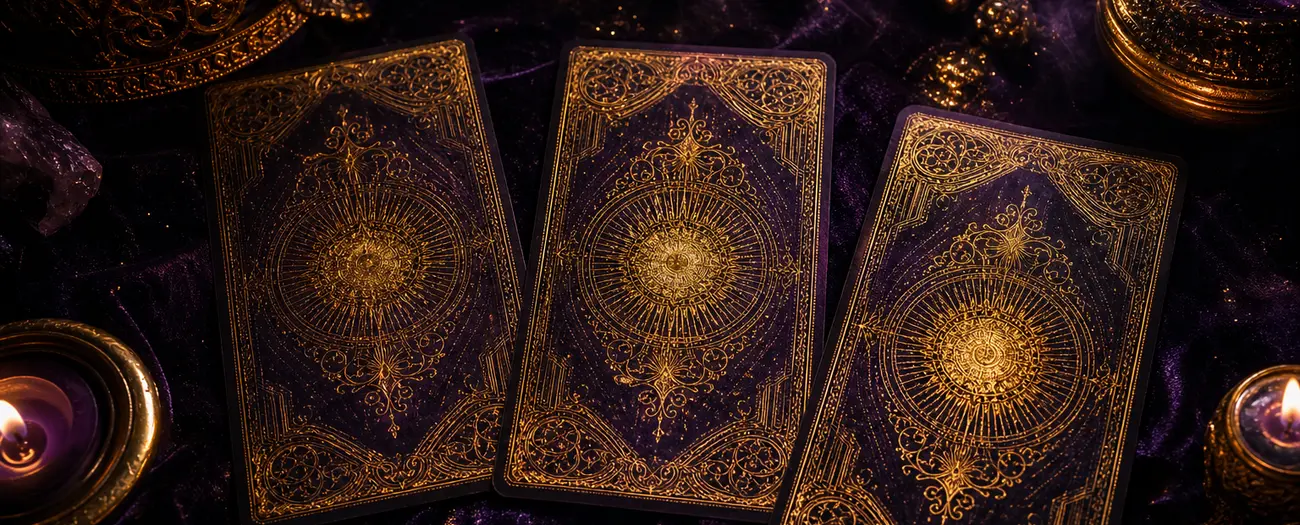
What a card of the day is for
A card of the day is a one-card reading you take in the morning and check against the evening. It does not tell you what will happen. It tells you which energy is easiest to work with today and where the same energy turns against you if you stop paying attention. Same card, two directions, and the choice between them is the whole exercise.
The practical value is small and cumulative. You get one idea to hold for the day, in plain language, at a moment when most people are still deciding what to be annoyed about. After two weeks you also get something else: a private log of which cards keep coming back, which is more informative about your life than any single spread.
How to use it during the day
Morning. Draw before the day starts moving. Read the card's plus and its minus, and pick one sentence to carry. If the Magician (beginnings, the first move) comes up, the sentence is: start the thing, today, from where it stands. If the Hermit (a pause, thinking on your own) comes up, it is: do not decide anything in public today.
Midday. When something goes sideways, look at the card again. Most conflicts read differently through the day's card: the Emperor (order and structure) turns a mess into a scheduling problem, the Lovers (a choice, and not only a romantic one) turns it into a decision you have been avoiding.
Evening. Ask one question: where did this card actually show up? That is the part that teaches you to read. A card you recognized at 6 p.m. is worth ten cards you looked up and forgot.
Three steps, one minute
- Draw before you open your inbox, not after the first message has set the tone.
- Write the card's working line on the same note as your to-do list, in your own words.
- In the evening, mark the one place you saw it. Three days of that and you are reading tarot rather than looking cards up.
Why only the 22 Major Arcana
The card of the day here comes from the Major Arcana, the 22 big cards. They describe states and directions clearly enough to hold for a whole day. The 56 Minor Arcana are detail cards, and a detail without a question attached to it turns into background noise by lunchtime. If you want the full deck, that is what the spreads are for, where every card gets a position to stand in.
These same 22 images have a second life. In the Destiny Matrix they are the numbers calculated from your date of birth, read as character and task rather than as today's weather. Fifteen of them sit in a single chart. There is a link from each card here to the arcana page, and the difference between the two readings is the clearest way to understand what tarot actually does.
When the card looks like bad news
Roughly a quarter of the deck looks alarming on the picture and reads as ordinary in practice. Death (endings and renewal, never a literal death) as a card of the day is an ending you can schedule: close the tab, cancel the subscription, finish the conversation you have been extending for a month. The Tower (plans collapsing to clear the ground) is a day when plans change without asking, so leave slack in the calendar. The Devil (habits, money and appetite) asks who is holding the leash today, you or the habit.
None of these predict an event. A card of the day describes a texture, and the texture is workable. That is why the reading here always names the plus and the minus, and ends with one move rather than with a warning.
One card a day, and why the deck repeats itself
You draw once per day. Come back later and the same card is still on the table, because the deck remembers your draw in your browser until midnight. This is not a limitation invented to be annoying: a second draw on the same day is just shopping for a nicer answer, and every reader will tell you the same thing. Tomorrow the deck reshuffles and gives you a new one.
Nothing is stored on our side and nothing is tied to a name or an email. Clear your browser data and the card goes with it. Want more than one card today? Lay a three-card spread on a specific question, or read the full meaning of any card in the dictionary of all 78.
Frequently asked questions
When is the best time to draw a card of the day?
In the morning, before the day has an opinion of its own. The card is meant to be carried through the day and checked in the evening. Drawing at 11 p.m. gives you a card and nothing to do with it.
Why do I keep getting the same card?
Within one day, because the draw is saved in your browser until midnight. Across weeks, because a theme is genuinely running in your life; readers treat a card that returns three or four times as the message rather than as a glitch.
Can a card of the day predict what will happen?
No. One card shows the tone of a day and where it tips. Events come from several cards agreeing in a spread with positions. Use the card as a focus and it earns its place; use it as a forecast and it will disappoint you.
What if I draw a card I do not like?
Read the second half of it. Every card has a working side and a slipping side, and the difficult cards are usually the practical ones: finish something, expect a change of plan, check who is in charge of your evening.
Is the draw random?
The shuffle is random in your browser, one card per day. There is no account, no profile and nothing sent anywhere, so the card cannot be tailored to you even in principle.
Seven tarot spreads
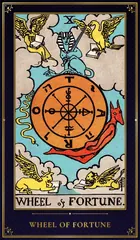
Three-card spread
Past, present and future of one situation. The layout to start with.
AI reading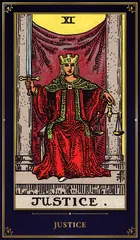
Yes or No
One card, one answer, and the condition attached to it.
instant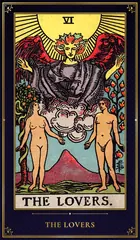
Love spread
You, the other person and what is actually between you.
AI reading
Money spread
What jams the money, what helps, where it goes from here.
AI reading
Career spread
Where you stand, what holds you back, what to do next.
AI reading
The Lock
Which feelings got shut away, why the door stays closed, what opens it.
AI reading · 5 cards
Lessons and gifts
One hard experience from both ends: the cost and what grew from it.
AI reading · 6 cards